

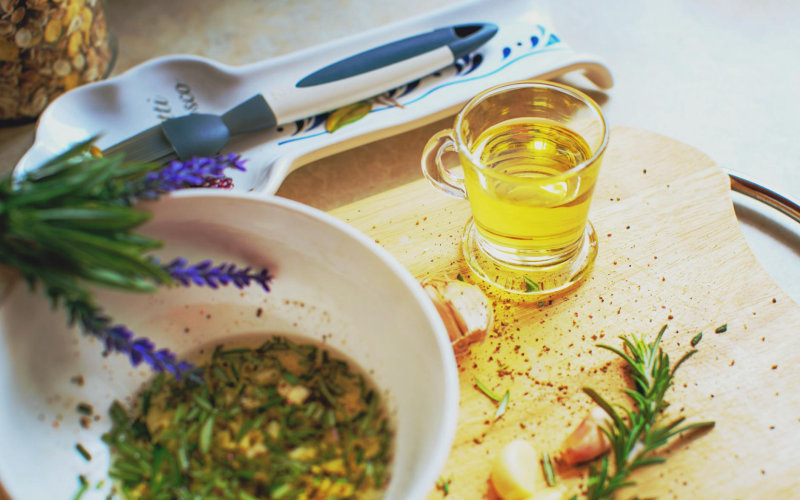
There’s a moment, maybe two minutes into making a curry or a chili, where your kitchen either smells incredible or it smells like… warm powder. That split-second difference almost always comes down to one thing: whether you bloomed your spices in hot fat first, or just tipped them into a wet, simmering pot and hoped for the best. I’ve done both. The second way is a waste of good spices.
Here’s what most home cooks never hear: the aromatic compounds that make spices actually taste like something — terpenes in cumin and coriander, aldehydes in cinnamon, phenols in cloves — are fat-soluble. They don’t dissolve in water. Add spices straight to a tomato sauce or a pot of soup and those compounds stay essentially locked up, unavailable to your dish, doing almost nothing. You end up with that dusty, flat, one-dimensional flavor that sends you reaching for more salt when what you actually need is better technique.
Why Fat Is the Only Carrier That Actually Works
The Journal of Agricultural and Food Chemistry published GC-MS analysis showing that oil-bloomed spices produce roughly 300% more measurable aroma intensity than dry-added ones. That’s not a rounding error. America’s Test Kitchen — which has spent decades stress-testing exactly this kind of thing with their 2M+ subscriber base. formally codified blooming as a foundational technique specifically because fat shifts fat-soluble flavor molecules from solid to liquid state, making them available to interact with everything else in your pot.
Water can’t do this. Full stop. Water boils at 212°F, and the key terpenes that give cumin its earthiness and coriander its citrus-floral edge require at least 285°F to volatilize properly. Drop those spices into a simmering broth and you’re not activating anything. You’re getting a faint ghost of what they could deliver.
A 2023 Cornell sensory panel made this embarrassingly concrete: curries made with bloomed spices scored 4.8 out of 5 for depth of aroma, while curries using dry-added spices scored 2.1. Same recipe. Same spices. Different technique. GC-MS testing detected 12 additional terpene derivatives in the bloomed versions. That’s not marginal improvement, that’s a different dish entirely.
The Temperature Window Most Guides Won’t Give You
Here’s where almost every blooming tutorial fails you. They say heat the oil until it “shimmers,” then add your spices. Shimmer is a wildly unreliable cue. Refined avocado oil shimmers around 390°F; butter solids start browning at 300°F. These are not the same signal, and if you’re switching fats from one night to the next, you’re guessing every time.
The actual sweet spot for blooming most spices is 325–375°F (about 140–180°C). Cumin and coriander bloom beautifully at 330–350°F. Push past 375°F and bitter pyrazines form. and there’s no recovering from that. You start over. Turmeric is even less forgiving; according to ACS Food Science & Engineering, curcumin degrades 92% within 60 seconds above 360°F. Walk away for half a minute with the heat too high and your turmeric is essentially gone.
Get a cheap instant-read thermometer. I know that sounds fussy. But after I incinerated a batch of ras el hanout into something vaguely resembling cigarette ash, I stopped eyeballing it entirely.
Timing Is Different for Ground vs.
Whole Spices
Ground spices need 15–30 seconds in hot fat. That’s genuinely it. Whole spices, cumin seeds, mustard seeds, cardamom pods. can handle 45–60 seconds, because volatile compounds take longer to escape through an intact outer layer. Treating them identically is one of the most common mistakes Spicewalla flagged in their February 2026 home-cook guide, where they listed failure to bloom alongside using stale product as the top two spice errors.
And about stale spices: blooming won’t rescue them. The USDA ARS Postharvest Lab has documented that ground spices have a 40x greater surface-area-to-volume ratio than whole spices, meaning they oxidize fast. If your cumin has been sitting in a jar above the stove for two years, the volatile compounds have largely evaporated already. The bloom is wasted on them. In most home kitchens, the real bottleneck isn’t technique, it’s spice freshness. Buy new spices first. Then learn to bloom them.
This Isn’t Just an Indian Technique (And That Framing Hurts You)
Most blooming guides frame it as Indian cooking’s tadka and leave it there. That framing makes a lot of Western home cooks mentally file it under “not my cuisine” and move on. Mistake. Mexican cooks bloom dried chiles in lard before building mole. Ethiopian cooks bloom berbere in niter kibbeh. French and North African cuisines both bloom spices in butter as a base step. These traditions developed independently and converged on identical food chemistry. The fat is the point. The culture is just the delicious context.
Burlap & Barrel. the single-origin spice brand that appeared on Shark Tank, built a Bon Appétit Test Kitchen collaboration blend specifically engineered around blooming in hot oil or ghee, with instructions rooted in South Asian tadka tradition but clearly positioned for general use. Their Wild Hing (asafoetida) comes with bloom-specific guidance. This technique isn’t niche anymore, and it hasn’t been for a while.
Everyday Western Dishes That Get Better Immediately
Your Friday night pasta sauce. Weekend oatmeal with cinnamon. Grain bowls. Compound butter. All of them improve dramatically with a 20-second bloom. I started blooming a pinch of smoked paprika and cumin in olive oil before adding canned tomatoes to pasta sauce about eight months ago and I haven’t gone back once. The depth is just there in a way it simply wasn’t before.
HurryTheFoodUp made a sharp observation in May 2026: vegetarian and plant-based cooks suffer most from skipping the bloom because vegetables don’t carry the fat and umami of meat that can partially mask underactivated spices. Your lentil soup, your roasted cauliflower, your chickpea stew. all of them hinge far more heavily on spice technique than a beef braise does. If you cook mostly plants, this matters more, not less.
One Safety Note Nobody Talks About
Older PTFE non-stick pans degrade above 450°F and can release toxic fumes. The temperature management required for proper blooming creates conditions that can approach that threshold, particularly if you’re distracted. Use stainless steel, cast iron, or a ceramic-coated pan. Not excessive caution, just sensible, given what you’re actually doing to that oil.
What I’d Actually Tell You to Do First
Start with cumin seeds in a tablespoon of neutral oil or ghee. Heat the pan to around 340°F if you have a thermometer, or medium heat for about 90 seconds if you don’t. Add the seeds. Listen. they should sizzle immediately and start popping within 20 seconds. Then add your aromatics and go from there. Do this once with a simple dal or a black bean situation and you’ll understand immediately why the technique exists. The difference isn’t subtle. It’s the whole thing.
FAQ
Does the oil ratio matter for blooming spices?
Yes, and most guides skip this entirely. The ideal ratio is roughly 1 tablespoon of oil per 1 teaspoon of total ground spices. Excess oil dilutes the spice concentration and demands longer heating time, which raises the chance of degradation, especially for heat-sensitive compounds like curcumin in turmeric.
Can I bloom spices at the end of cooking instead of the beginning?
You can, and in some contexts it’s actually the better move. South Indian cuisine uses a technique called tadka where bloomed spice oil is poured sizzling over a finished dish. dal, for instance. The result is a sharper, fresher aroma rather than deep integration. Both approaches are valid; they just produce different flavor profiles depending on what you’re after.
What’s the right cookware for blooming?
Stainless steel, cast iron, or ceramic-coated pans are your best options. Older PTFE non-stick coatings can degrade near the upper temperature range used for blooming, so skip those. A wide, heavy-bottomed pan also distributes heat more evenly, which helps you avoid hot spots that scorch one section of spices while another section barely wakes up.
Photo by Vikki on Pexels