

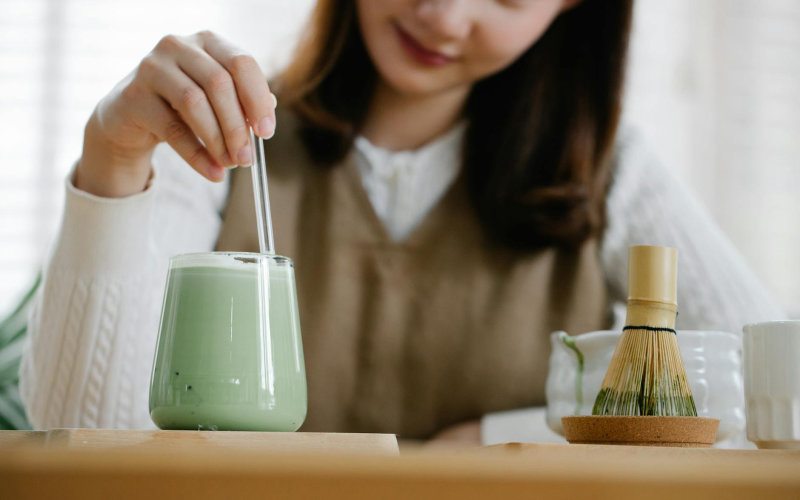
You guys, I have to be honest with you — I spent an embarrassing amount of money at coffee shops before I figured this out. Like, $7 a cup, three times a week, because every time I tried making matcha at home it came out either lumpy, weirdly bitter, or just… sad. A green, chalky puddle of disappointment.
But here’s the thing nobody tells you: making a genuinely GOOD matcha latte at home isn’t complicated. It’s just misunderstood. Most recipes skip the two steps that actually matter — and that’s exactly why yours keeps going wrong.
So today I’m walking you through the EXACT process I use now, every single morning, start to finish in under 8 minutes. No clumps. No bitterness. Just a smooth, creamy, properly made matcha latte that honestly tastes better than half the café versions I’ve had.
The Only Ingredients You Actually Need
Let’s talk ingredients first, because THIS is where most people go wrong before they even touch a whisk.
You need ceremonial grade matcha powder — not culinary grade. I know culinary grade is cheaper, and yes, it works fine in baked goods, but it’s more bitter and coarser in texture. For lattes, ceremonial grade is genuinely worth it. I use Ippodo Matcha’s Kan blend, which runs about $28 for 30g and lasts me almost three weeks drinking daily. Jade Leaf and Encha are also solid options if you want to spend less.
For milk, oat milk froths the best and adds a natural sweetness that balances the matcha beautifully. Oatly Barista edition is my go-to. Full-fat dairy works great too. Almond milk? Honestly, skip it. too thin, separates weirdly, and doesn’t do the flavor any favors.
You’ll also need filtered water (temp matters, more on that in a second), a sweetener if you like it, and optionally a tiny pinch of vanilla extract. That’s it.
Full Ingredient List:
- 1 teaspoon ceremonial grade matcha powder (about 2g)
- 2 oz filtered water, heated to 175°F (NOT boiling)
- 6–8 oz oat milk or whole milk
- 1–2 teaspoons honey, maple syrup, or simple syrup (optional)
- ¼ teaspoon vanilla extract (optional but SO good)
The Clump Problem.
And How to Actually Fix It
Okay, this is THE thing. The reason your matcha clumps is simple: you’re adding hot liquid directly to dry powder. The outer layer of powder seizes up instantly and traps the rest inside. Texture-wise it’s a nightmare.
The fix? Sift your matcha first. Just 10 seconds with a fine mesh sieve over your cup or bowl before you add ANY liquid. I use a small $6 stainless strainer from Amazon and it changed my life, no exaggeration.
After sifting, add your 175°F water first (just the 2 oz), not your milk. Then whisk. The low-volume, controlled whisking in hot-but-not-boiling water is what creates a smooth, fully dissolved base before milk ever enters the picture. Boiling water (212°F) scorches the catechins in matcha and makes it bitter. 175°F is the sweet spot. most electric kettles have a temperature setting now, and if yours doesn’t, just let boiling water sit for about 3 minutes.
Step-by-Step Directions (The Full 8-Minute Method)
Here’s the complete process, exactly as I do it every morning.
Step 1, Sift (30 seconds). Add 1 teaspoon of matcha to a small sieve and tap it over your mug or a small bowl. This alone eliminates about 80% of your clump problem.
Step 2. Whisk the base (90 seconds). Add 2 oz of 175°F filtered water to your sifted matcha. Using a bamboo chasen (traditional matcha whisk) or a small electric milk frother, whisk in a quick W or M motion, not circles. for about 60 to 90 seconds until frothy and fully smooth. A frother works honestly just as well as a chasen here, and costs about $8 on Amazon.
Step 3, Sweeten now (15 seconds). If you’re adding honey or maple syrup, stir it into the warm matcha concentrate RIGHT NOW while it’s still hot. Trying to mix sweetener into cold milk after the fact just doesn’t work.
Step 4. Heat and froth your milk (3 minutes). Warm your 6–8 oz of oat milk in a small saucepan over medium-low heat until steaming but NOT simmering, around 150°F. Then froth it using your handheld frother for about 20 seconds until foamy.
Step 5. Combine and pour (30 seconds). Pour your matcha concentrate into your mug first. Then slowly pour in your frothed milk, holding back the foam with a spoon and spooning it on top last. Want it iced? Pour the concentrate over a glass of ice, then add cold oat milk. Done.
Total time, real talk: 6 to 8 minutes. And YES it is worth every second.
Getting the Flavor Balance Right
Bitterness is almost always either a temperature issue (water too hot) or a powder issue (low grade matcha). Fix those two things and you’re already 90% there.
But sweetness matters too. I do 1.5 teaspoons of honey on most days. If you’re going unsweetened, add that ¼ teaspoon of vanilla extract, it rounds out the earthy edge without adding sugar, and it’s a genuinely underrated move that most guides completely skip over.
So experiment. Start with 1 teaspoon of sweetener your first time and adjust from there.
What I’d Do If I Were Starting From Scratch
If I’m being real, the single investment that made the BIGGEST difference for me was buying proper ceremonial grade matcha and a $6 sieve. Not a fancy frother. Not a $40 chasen set. Just good powder and a sieve.
Most home matcha recipes fail at the sourcing step before anything else. Cheap, bitter powder plus boiling water is always going to taste like disappointment, no matter how perfectly you whisk it. Start with the right matcha and the rest is honestly easy.
You’ve got this, Posse. Make it tomorrow morning and let me know how it goes.
Nutrition Facts (Per Serving. 1 Matcha Latte with Oat Milk and 1 tsp Honey)
| | |
|—|—|
| Calories | ~120 kcal |
| Total Fat | 3g |
| Carbohydrates | 18g |
| Sugars | 10g (includes 6g natural oat milk sugars + 4g honey) |
| Protein | 2g |
| Caffeine | ~70mg |
| L-Theanine | ~25mg |
Using unsweetened oat milk and no added sweetener drops this to approximately 80 kcal and 9g carbs. Whole dairy milk adds roughly 30 additional calories and 3g more protein per serving.
Photo by Anna Pou on Pexels