
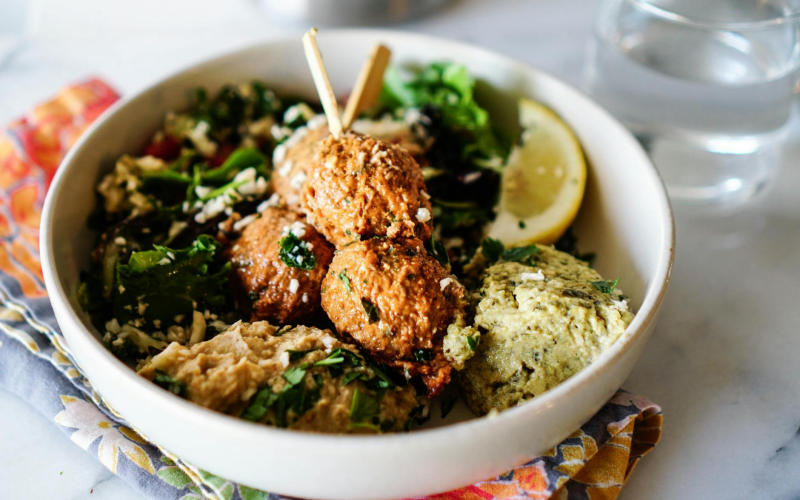
I made this for the first time on a Tuesday night when I had exactly zero desire to cook. Opened the fridge, found a can of chickpeas and one pretty sad cucumber, and twenty minutes later I was actually eating something that felt like a real meal. That was four years ago. I’ve made some version of it probably 200 times since.
Here’s the thing about Mediterranean food that nobody really talks about: it’s designed to be simple. This isn’t a cuisine built on complicated technique or hard-to-find ingredients. It’s farmers and fishermen throwing together whatever they had. So the idea that you need a specialty grocery store—or a whole Sunday afternoon of meal prep—to eat this way? Completely backwards.
This bowl takes 15 minutes. Real 15 minutes, not the food-blogger version that somehow requires 45. One knife, one cutting board, ingredients from literally any supermarket.
What You’re Actually Building Here
Think formula, not recipe. Base plus protein plus vegetables plus sauce. That’s the whole thing. Once you internalize that structure, you can walk into any grocery store and pull together something legitimately delicious in under 15 minutes without glancing at a recipe card.
The Mediterranean diet (ranked #1 by U.S. News & World Report for the sixth consecutive year in 2024) is built on exactly this kind of flexible, ingredient-driven cooking. Not rigid recipes. Patterns.
The Base (2 Minutes)
Your two best options are instant couscous or pre-cooked rice. Couscous is my personal favorite for speed—you pour boiling water over it, cover it for five minutes, fluff with a fork, done. Most grocery stores carry Near East brand for around $2.49 a box, which makes four servings.
But 90-second microwave rice pouches work just as well. Uncle Ben’s, Trader Joe’s house brand, whatever’s on the shelf. Farro and quinoa also come in pre-cooked pouches now if you want to feel slightly more virtuous about the whole thing.
One tip: season your base before you add anything else. A drizzle of olive oil and a pinch of salt while it’s still warm makes a bigger difference than most people expect.
The Protein (3 Minutes)
No cooking required if you play this right. Here are your best no-cook options.
Canned chickpeas are the workhorse. Drain, rinse, pat dry, toss in a little olive oil and cumin. Done in 90 seconds. One 15-ounce can runs about 25 grams of protein and costs under a dollar.
Rotisserie chicken is your other ace. Every grocery store in America sells one for $5–$8. Pull it apart with two forks directly over the bowl, shred what you need, refrigerate the rest for tomorrow.
And if you eat seafood, canned tuna or salmon (Safe Catch specifically, if mercury’s a concern) works beautifully here. Drain it, hit it with lemon juice, you’re done.
The Vegetables (5 Minutes)
Most of the knife work happens here, but none of it is complicated. You’re basically just chopping things into small pieces.
Must-haves: cucumber, cherry tomatoes, red onion. These three together give you the textural backbone of the whole bowl. The cucumber and tomato cool everything down; the red onion gives it bite. Aim for pieces roughly the size of a chickpea so every forkful gets a little of everything.
Nice-to-haves: kalamata olives (get the pre-pitted ones in a jar, obviously), roasted red peppers from a jar, artichoke hearts. All shelf-stable, all at any regular supermarket, most requiring zero chopping.
Roasted zucchini or eggplant would be great too—but those take longer than 15 minutes from raw. Save them for when you actually have time.
The Sauce (2 Minutes)
The sauce is what makes or breaks this. And I feel strongly about one thing: don’t use store-bought Italian dressing and call it Mediterranean. It’s not the same thing.
Your two real options are a quick tahini sauce or a lemon-herb vinaigrette. Here’s the tahini version because it’s more interesting: two tablespoons tahini, juice of half a lemon, one small garlic clove grated fine, a pinch of salt, 2–3 tablespoons of cold water to thin it out. Whisk. Thirty seconds, maybe.
The lemon-herb version is even simpler—olive oil, lemon juice, dried oregano, salt, a splash of red wine vinegar. You probably have all of that right now.
The Assembly (2 Minutes)
Layer your base, pile on the protein, scatter the vegetables, drizzle the sauce. Crumble some feta over the top if you have it. Olives go on last.
The order matters a little. Warm base on the bottom so the flavors meld together. Cold vegetables on top so they stay crisp. Sauce goes on right before you eat—not before—because that’s what keeps the textures distinct.
Fresh herbs (parsley, mint, dill) genuinely change the whole personality of the bowl. But I get it—not everyone has fresh herbs on a Tuesday. Dried parsley works fine. So does nothing.
Customizing Without Overthinking It
So you hate chickpeas. Or you’re out of cucumber. No problem—this bowl absorbs substitutions without falling apart.
Swap chickpeas for white beans, lentils, or edamame. Swap cucumber for celery or even shredded cabbage in a pinch. No feta? Goat cheese is fine. No tahini? Hummus thinned with lemon juice is basically the same thing, and you probably already have a tub sitting in the fridge.
The one thing I wouldn’t skip? Lemon. Acid is non-negotiable here. It ties everything together in a way nothing else can replicate.
Bottom Line
Here’s something I haven’t seen anyone else actually say about this: the reason Mediterranean bowls taste so much better at restaurants isn’t better ingredients—it’s temperature contrast. Restaurant kitchens plate warm protein right next to cold, just-cut vegetables, and those two temperatures hitting your palate at the same time is what makes it feel vibrant and alive. Most people making this at home either heat everything up or let it all drift to room temperature. Keep your vegetables genuinely cold (straight from the fridge, cut last) and your base genuinely warm, and your homemade bowl will stop tasting like sad desk lunch and start tasting like something you’d happily pay $16 for.
Frequently Asked Questions
Can I meal prep this 15 minute mediterranean bowl recipe in advance?
Yes, with one important caveat. Prep the components separately and store them in different containers. The base, protein, and vegetables all keep for 4–5 days in the fridge. But don’t add the sauce or combine everything until you’re actually eating—once it’s dressed, the vegetables get soggy fast.
Is this actually filling enough for dinner?
One full bowl with a real protein source runs about 550–650 calories depending on portions—plenty for most adults. If you find yourself hungry an hour later, add more chickpeas or a soft-boiled egg on top.
What’s the best store-bought tahini to use?
Soom and Seed + Mill are both excellent. But honestly, the Trader Joe’s organic tahini at $4.99 is genuinely good and probably available near you.
Can I make this completely vegan?
Absolutely. Skip the feta, use chickpeas or white beans as your protein, and double-check that your tahini doesn’t have any additives. Everything else in this bowl is already plant-based.
Photo by Loren Castillo on Pexels