

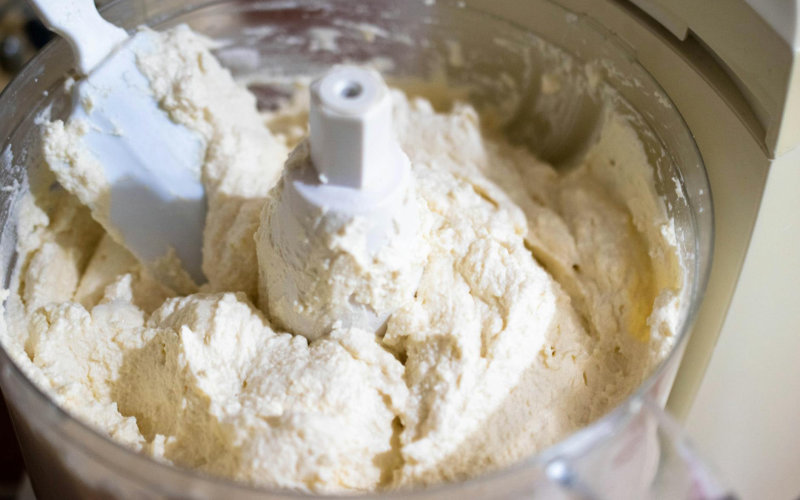
I ruined store-bought ricotta for myself about four years ago. Made a batch of this stuff on a random Tuesday night, spread it on toast with honey, and that was it—game over for the $6 tub from the grocery store. You’ll understand exactly what I mean the first time you taste yours still warm from the pot.
Most people assume cheesemaking involves special cultures, thermometers, aging caves, and probably a culinary degree hanging on the wall somewhere. Ricotta laughs at all of that. This is genuinely one of the most forgiving things you can make in a kitchen, and the result is so far beyond what you’re buying at the store that it almost feels unfair.
Three ingredients. One pot. About 25 minutes. Let’s get into it.
What You Actually Need (And Nothing Else)
Whole milk—one full gallon. White vinegar or fresh lemon juice, about 3 tablespoons. Salt, roughly a teaspoon. That’s your entire shopping list.
Don’t use ultra-pasteurized milk. This is the one rule that actually matters. Ultra-pasteurized milk (you’ll see “UHT” on the carton) has been heated so aggressively that the proteins won’t curdle properly, and you’ll end up with a sad, watery mess instead of cheese. Regular pasteurized whole milk works perfectly. Organic is fine too.
The Equipment You Already Own
You need a heavy pot—a 4 or 5 quart dutch oven is ideal, but any heavy-bottomed pot does the job. A colander. Cheesecloth or a thin kitchen towel. A thermometer is helpful but honestly not required once you’ve done this once or twice.
That’s it. No cheese molds, no special cultures, nothing you have to order online.
The Process, Step by Step
Pour your gallon of milk into the pot and set it over medium heat. Stir occasionally so the bottom doesn’t scorch. You’re heating the milk to around 190°F—just before a full boil, where you’ll see steam rising and tiny bubbles forming at the edges.
Once you hit that point, pull the pot off the heat and pour in your acid. Stir gently, just two or three slow passes with a spoon. Then stop. Don’t agitate it further. You’ll see the milk start separating into white curds almost immediately, and honestly it’s one of the more satisfying things to watch happen in a kitchen.
Let it sit undisturbed for 10 minutes.
Draining: This Is Where You Control the Texture
Line your colander with two layers of cheesecloth and set it over a large bowl. Ladle—don’t pour—the curds in gently. Pouring breaks everything up too aggressively and you’ll lose texture you can’t get back.
For a spreadable, creamy ricotta that’s still moist, drain it for just 15 to 20 minutes. For something firmer—suitable for lasagna or baked pasta dishes like a classic Sicilian-style stuffed shell—let it drain 45 minutes to an hour. I usually pull mine at 20 minutes because I like it on the softer side.
Season with your salt at the end. Taste as you go.
How Much Ricotta Does This Make?
A gallon of whole milk yields roughly 2 to 2.5 cups of finished ricotta. Sounds like a lot of milk for a smaller output, I know. But fresh ricotta and commercial ricotta aren’t really the same product—the flavor difference justifies every drop.
Storing Your Ricotta
Refrigerate it in a sealed container. It keeps beautifully for about 5 days. And if yours seems to release a little liquid in the fridge, just drain it again briefly before using. That liquid is whey, and some people save it for soups or bread baking (it genuinely works great in bread dough, by the way).
Bottom Line
Here’s something nobody really talks about: the acid you choose changes the flavor profile more than almost any other variable. Lemon juice gives you a brighter, slightly citrusy ricotta that’s extraordinary on crostini or alongside fruit. White vinegar produces a cleaner, more neutral curd that disappears into savory dishes without any competing flavor whatsoever. Most recipes treat them as interchangeable. They’re not. Pick your acid based on what you’re actually cooking, and your ricotta will stop being a supporting character and start being the whole point.
Frequently Asked Questions
Can I use 2% milk instead of whole milk?
You can, but your yield drops noticeably and the texture gets a little grainy rather than creamy. Whole milk is genuinely worth it here. The fat content is what gives fresh ricotta that lush, almost pillowy texture you’re after.
Why didn’t my milk curdle properly?
Almost certainly the ultra-pasteurized milk issue mentioned above. But it could also be that your milk wasn’t hot enough—you really do need to get close to 190°F for the proteins to set. Too cool and the curds stay tiny and fine, giving you a thin, watery result instead of something you can actually scoop.
Can I freeze homemade ricotta?
Technically yes, but the texture suffers. It gets slightly grainy after thawing. If you’re using it in a baked dish like lasagna, frozen-then-thawed ricotta is totally fine. For spreading or eating fresh? Just make a smaller batch and eat it within five days.
Is lemon juice or vinegar better?
Depends entirely on what you’re making. I personally keep both on hand and decide based on the recipe. Lemon juice for sweet applications or fresh herb dishes. White vinegar when I want the ricotta to blend quietly into something savory without announcing itself.
Photo by Julio Mantilla on Pexels